By MOTIFE Insights, 19 November 2026
For a company planning its 2027 hires, three questions matter. Can it find engineers with the experience they need? How much should it budget for each position? And does it need a Polish subsidiary to make the first hire?

MOTIFE estimates that Poland’s IT workforce reached 450 000 professionals in 2026, up from approximately 410 000 in 2025. This represents growth of nearly 10% in one year. Employers can recruit across several established technology hubs, including Warsaw, Krakow, Wroclaw, Poznan and Tri-City. Polish universities also produce around
19 500 ICT graduates each year.
More than three decades of international investment have helped build a pool of engineers in Poland with experience developing products, running platforms and leading teams across borders. For German employers, that experience spans industries as well as technologies. Companies such as ZF, Bosch and ERGO already employ sizeable IT teams in Poland, giving engineers opportunities to build expertise in automotive systems, manufacturing and insurance.

Software engineering shows the largest difference among the five positions. The upper Polish figure is PLN 19 400 per month, compared with PLN 31 100 in median monthly total compensation in Germany.

In the supplied employment-cost model, the listed employer contributions add 20.48%to gross salary in Poland and 22.24% in Germany, before additional pension contributions or levies. The two countries arrive at those totals differently. In Germany, statutory health insurance makes up a substantial partof the employer’s contribution. In Poland, the employee funds health insurance, while the employer pays a separate disability insurance contribution.
Consider aPolish employment offer of PLN 20 000 (€4 600) gross per month. Underthese assumptions, employer contributions add approximately PLN 4 100 (€900),bringing the monthly payroll cost to PLN 24 100 (€5,600). If theemployee participates in Poland’s Employee Capital Plans (PPK), theemployer contributes a further PLN 300 (€100). The total monthly budget thencomes to PLN 24 400 (€5 600) before benefits and equipment.

Germany and Poland share a border and the same time zone year-round, giving engineering teams a full working day together. Seven airlines serve 23 direct routes linking seven to eight Polish airports with nine German destinations, depending on the season. Around 330–360 direct flights leave Poland for Germany each week, making regular visits practical.
German businesses already employ technology teams in Poland across automotive engineering, financial services, software, logistics and retail. The ten largest German companies by Polish IT headcount in the supplied dataset accountfor 12 447 IT professionals.

The first decision is who will employ the people hired in Poland. Recruitmentcovers finding and selecting candidates. The employment contract can then sit with the company’s own Polish subsidiary or with a local Employer of Record.
A Germancompany hiring its first data engineer can combine local recruitment with anEOR while the role and reporting line sit within its existing data team. Amanufacturer planning a permanent engineering centre may prefer to establish asubsidiary from the outset, particularly if it expects to appoint localmanagers and recruit across several functions.
MOTIFEsupports both routes, from benchmarking the first position and findingcandidates to setting up a Polish subsidiary and managing local operations asthe team grows.
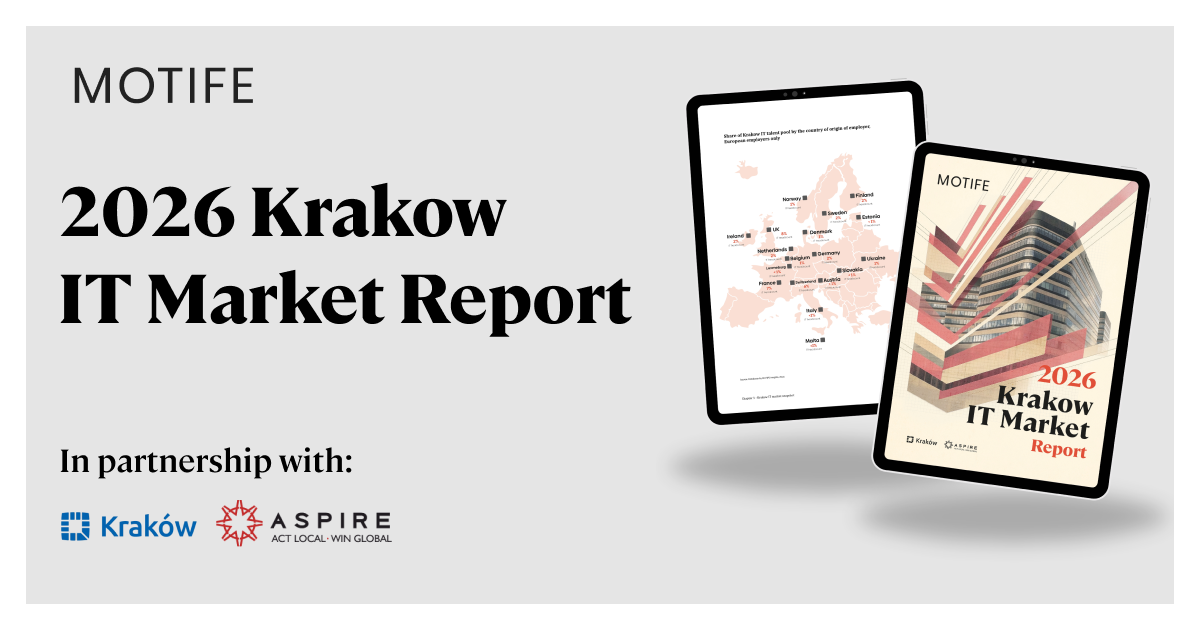
Learn more about what international companies have achieved with their Krakow tech labs by downloading our 2026 Krakow IT Market Report
If you are interested in setting up your own engineering hub in Poland, contact us at MOTIFE to learn more.
If you are looking for interesting job opportunities in tech companies in Poland, check out open roles at motife.com/jobs.
Explore essential data on Poland's tech landscape.