
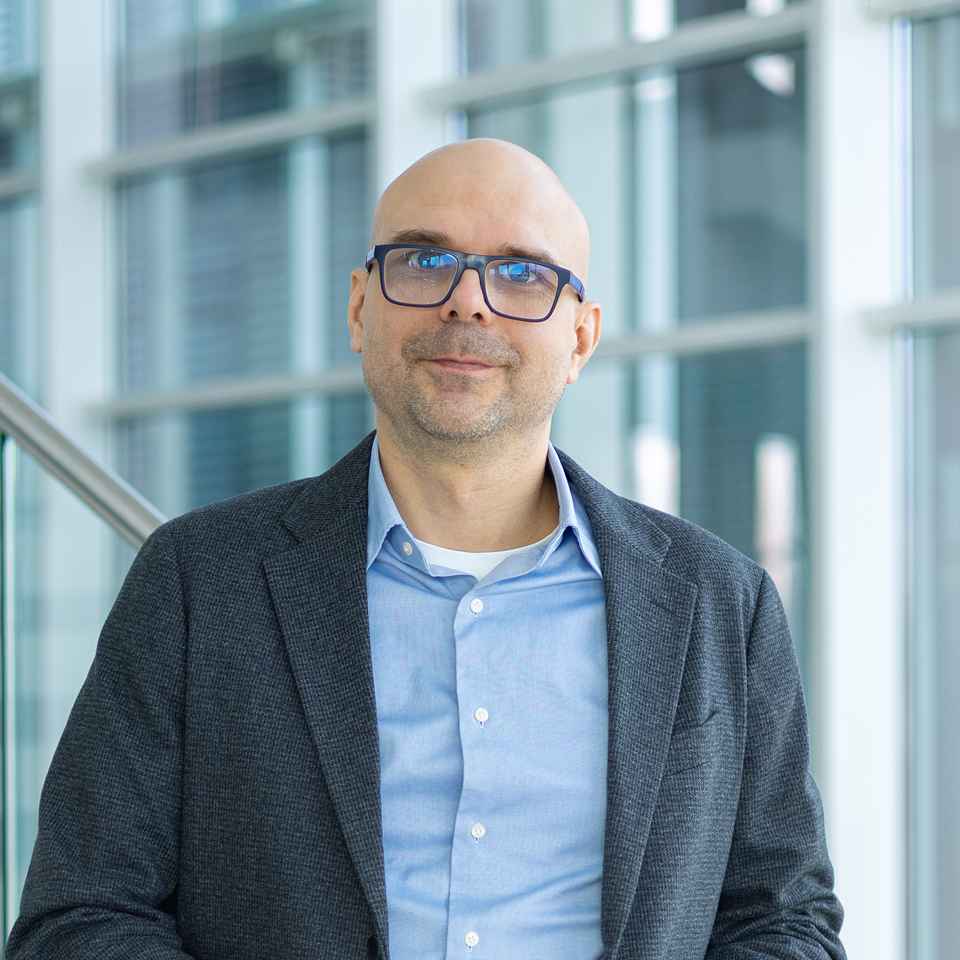
By MOTIFE Insights, 25 June 2026
In a world dominated by autonomous agents, the key competencies are rigorous specification, uncompromising verification, and the ability to orchestrate a digital army. This is not the end of the developer profession; it is its radical new beginning.
Download the 2026 Krakow IT Market Report to explore more insights from local technology leaders and the latest data on Krakow’s IT ecosystem.
Until recently, programming was associated with thousands of keystrokes. Today, that proportion is being turned upside down. Modern AI agents can easily handle entire code repositories, and their productivity is growing exponentially. The statistics are striking: in public repositories on GitHub, about 4% of code already comes from AI agents, and it is estimated that by the end of the year, this figure will rise to 20%. Traditional manual “keyboard coding” is becoming the domain of an ever-narrower and most critical part of systems.
Does this mean the programming profession will disappear? Absolutely not. What we are witnessing is a classic example of the Jevons paradox: increased efficiency in using a resource (code) paradoxically leads to higher demand for that resource. As code becomes “cheap,” we will produce ten times more of it. This, however, forces a complete shift in the required skill set. Humans move into the role of specification architects, test authors, and process managers.
In this new paradigm, we must operate at a higher level of abstraction. Long ago we stopped programming in machine code, and now we are also stopping “thinking in syntax.” We work in the language of requirements specification. The greatest challenge becomes precision of thought. AI can execute almost any task, but it is the human who must know what they want and describe it flawlessly.
Project “under-specification,” which used to surface during a two-week sprint, becomes a critical error in the AI world. We must adopt the rigor of engineering practices used in critical systems—there is no room for assumptions. We see this clearly at Comarch: a recent AI Hackathon we organized demonstrated that those who succeed are the ones who define the problem with the greatest precision and effectively navigate the work of AI agents.
If machines produce code at scale, the key question becomes: who verifies it? Humans have limited attention spans and a natural tendency to lose focus. As a result, the center of gravity in software engineering is shifting dramatically toward verification. The role of testers will rise to that of a crucial guardian of system integrity. The traditional benchmark of 70% test coverage is no longer enough, we must aim for 100%.
That is precisely why we launched the AI Academy. Our goal is to fully adapt the organization to an AI-native model. We are not focusing only on developers, we want to give every employee, regardless of department, the opportunity to learn and understand this new reality. We believe that in the AI era, everyone must become an auditor of quality and a safeguard within the processes they participate in.
Traditional frameworks of work in IT are beginning to crack. Although today we still operate within a human rhythm, the market is inevitably moving toward a model where what used to take two weeks will happen within a single day. In the near future, it will become standard for AI agents to work overnight for 12 hours, performing the tedious implementation work and delivering ready-to-review results by morning.
Humans will start the day by verifying whether the code produced by the agents aligns with the specification, and then move on to preparing precise specifications for the next task. This workflow requires a completely new arrangement of roles, tools, and meetings. There are no ready-made “playbooks” for such teams yet, we are creating them now, in real time. It is a fascinating but demanding shift, as the developer of the future becomes a manager of machines, which also brings psychological challenges due to fewer human interactions in the creative process.
Behind the scenes, there is also increasing discussion about the emergence of the first one-person unicorn startup, a company valued at one billion dollars run by a single founder. With AI, one creator can orchestrate an army of agents and accomplish tasks that once required fifty employees.
The market will change radically, and at a pace we have never seen before. Yet there is no reason to fear for the future of the industry; rather, we are likely to witness an extraordinary explosion of possibilities. The key to success will be abandoning old habits and accepting that our greatest value is no longer knowledge of syntax, but the ability to rigorously define the world that artificial intelligence will build for us.
Learn more about the tech ecosystem in Krakow and Poland by downloading the Krakow IT Market Report 2026
.png)
If you are interested in recruitment and staffing services, contact us at MOTIFE to learn more.
If you are looking for interesting job opportunities in tech companies in Krakow and remote, check out open roles at motife.com/jobs.
Explore essential data on Poland's tech landscape.


View all job offers

Download the report

Read the full client story


